

Building Native App-like Web Apps with Nuxt
Want to Build an App with Web Technologies?
Did you know you can build apps using web technologies? Create a web app with Nuxt, wrap it with Expo or Flutter's webview, and you can publish it directly to app stores.
But web apps have one major weakness: page transitions feel awkward.
Native apps have smooth screen transitions. When going from a list to detail, it slides in; when tapping an image, it expands open. But on the web? Pages just abruptly change.
What if web apps could have native-like page transitions? That web app would feel like a real app.
Today, we'll build a web app with native app-like page transitions using Nuxt.
What is SSGOI?
SSGOI is a page transition library that works in all browsers.
Chrome has the View Transition API, but it doesn't work in Safari and Firefox. SSGOI solves this problem.
SSGOI's advantages:
- All modern browser support (Chrome, Firefox, Safari, Edge)
- Perfect SSR/SSG compatibility
- Natural motion with spring-based physics animations
- Various built-in transitions (Drill, Slide, Pinterest, Instagram, etc.)
Getting Started
Let's start with the official SSGOI template.
# Clone the repository
git clone https://github.com/meursyphus/ssgoi

# Install dependencies from root (Important!)
pnpm install

# Navigate to Nuxt template folder
cd templates/nuxt

# Run dev server
pnpm run dev
Note:
pnpm installmust be run from the root path. It's a monorepo structure, so install all dependencies from the root.
Open http://localhost:3000 in your browser to see the template demo.
Exploring the Folder Structure
Here's the templates/nuxt/ folder structure.
templates/nuxt/
├── app.vue                  # Root app component
├── pages/
│   ├── posts/               # Drill transition example
│   │   ├── index.vue
│   │   └── [id].vue
│   ├── pinterest/           # Pinterest transition example
│   │   ├── index.vue
│   │   └── [id].vue
│   ├── profile/             # Instagram transition example
│   │   ├── index.vue
│   │   └── [id].vue
│   └── products.vue         # Slide transition example
│       ├── all.vue
│       ├── electronics.vue
│       ├── fashion.vue
│       ├── home.vue
│       └── beauty.vue
├── components/
│   ├── demo-layout.vue      # Ssgoi configuration (Core!)
│   ├── demo-wrapper.vue     # Mobile frame UI
│   ├── pin-card.vue
│   ├── post-card.vue
│   ├── profile-feed.vue
│   └── products/
└── composables/             # Data management
    ├── use-posts.ts
    ├── use-pinterest.ts
    ├── use-profile.ts
    └── use-products.ts
The core file is components/demo-layout.vue. All transition configurations are here.
Configuring Ssgoi
Open components/demo-layout.vue.
<template>
  <main>
    <Ssgoi :config="config">
      <slot />
    </Ssgoi>
  </main>
</template>

<script setup lang="ts">
import { Ssgoi } from '@ssgoi/vue';
import type { SsgoiConfig } from '@ssgoi/vue';
import {
  drill,
  pinterest,
  instagram,
} from '@ssgoi/vue/view-transitions';

const config: SsgoiConfig = {
  transitions: [
    // Pinterest transition
    {
      from: '/pinterest/*',
      to: '/pinterest',
      transition: pinterest(),
      symmetric: true,
    },
    // Posts - Drill transition
    {
      from: '/posts',
      to: '/posts/*',
      transition: drill({ direction: 'enter' }),
    },
    {
      from: '/posts/*',
      to: '/posts',
      transition: drill({ direction: 'exit' }),
    },
    // Profile - Instagram transition
    {
      from: '/profile',
      to: '/profile/*',
      transition: instagram(),
      symmetric: true,
    },
  ],
};
</script>
Config structure:
from: Starting path (*is a wildcard)to: Destination pathtransition: Transition to usesymmetric: Apply same transition in reverse
Wrapping Pages with SsgoiTransition
Each page must be wrapped with SsgoiTransition and given a unique id.
Looking at pages/posts/index.vue:
<template>
  <SsgoiTransition id="/posts">
    <div class="min-h-full bg-[#121212] px-4 py-6">
      <!-- Post list -->
      <div class="space-y-2">
        <NuxtLink
          v-for="post in posts"
          :key="post.id"
          :to="`/posts/${post.id}`"
        >
          <!-- Post card -->
        </NuxtLink>
      </div>
    </div>
  </SsgoiTransition>
</template>

<script setup lang="ts">
import { SsgoiTransition } from '@ssgoi/vue';

const posts = useAllPosts();
</script>
Looking at pages/posts/[id].vue:
<template>
  <SsgoiTransition :id="`/posts/${id}`">
    <div class="min-h-screen bg-[#121212]">
      <!-- Post detail -->
    </div>
  </SsgoiTransition>
</template>

<script setup lang="ts">
import { SsgoiTransition } from '@ssgoi/vue';

const route = useRoute();
const id = route.params.id as string;

const post = usePost(id);
</script>
Key point: The
idmust match thefrom/toin config for SSGOI to apply the transition.
Drill Transition
A transition that feels like drilling from a list into detail.
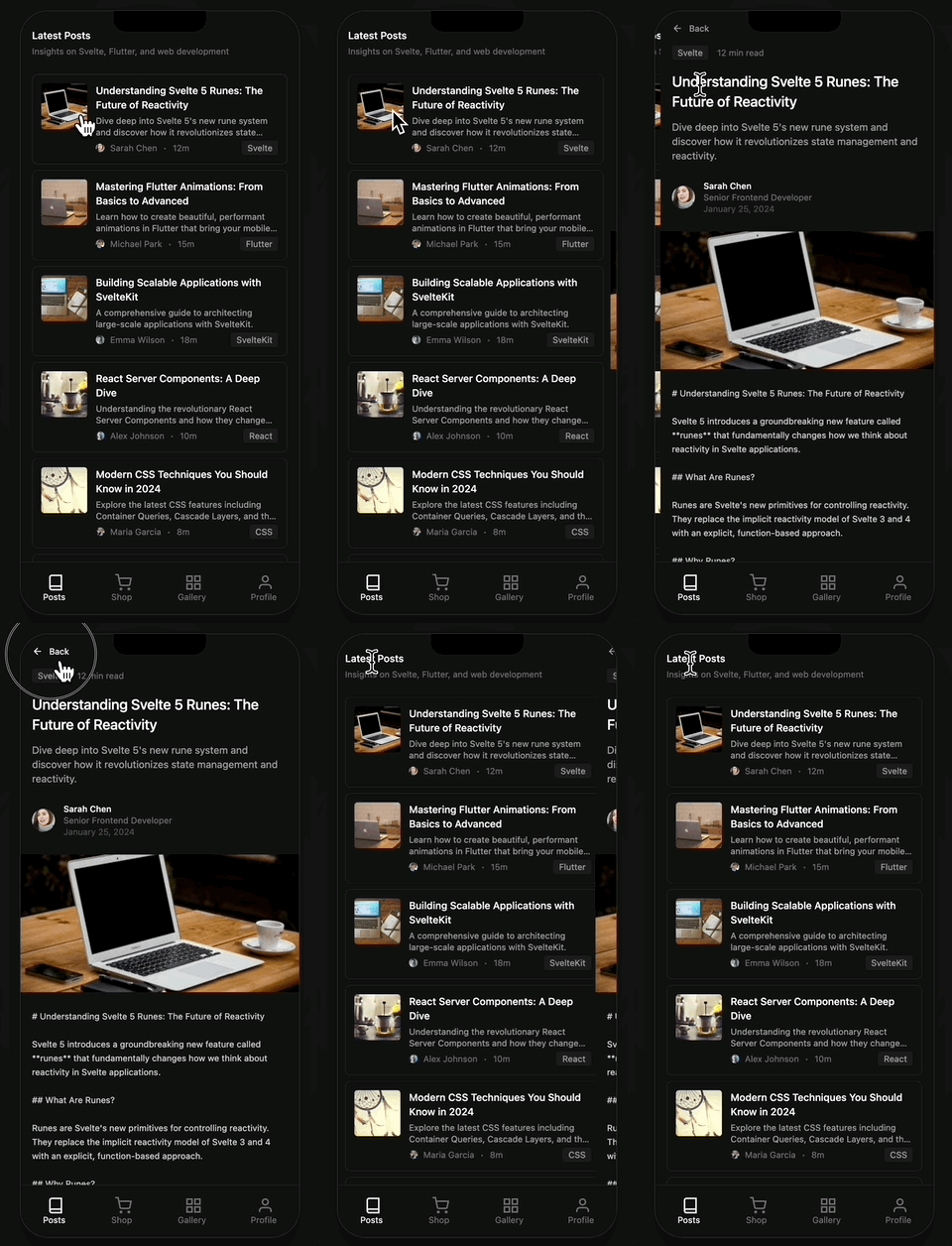
Template location: pages/posts/
import { drill } from '@ssgoi/vue/view-transitions';

// List → Detail (entering)
drill({ direction: 'enter' });

// Detail → List (exiting)
drill({ direction: 'exit' });
Config setup:
{
  from: '/posts',
  to: '/posts/*',
  transition: drill({ direction: 'enter' }),
},
{
  from: '/posts/*',
  to: '/posts',
  transition: drill({ direction: 'exit' }),
},
Options:
direction:"enter"|"exit"opacity: Iftrue, adds fade effect
Slide Transition
A left/right sliding effect for tab UI.

Template location: pages/products.vue
import { slide } from '@ssgoi/vue/view-transitions';

// Slide left
slide({ direction: 'left' });

// Slide right
slide({ direction: 'right' });
pages/products.vue uses nested Ssgoi to transition only the tab area:
<template>
  <SsgoiTransition id="/products">
    <!-- Header, tab buttons -->
    <div class="flex-1 overflow-hidden">
      <Ssgoi :config="config">
        <NuxtPage />
      </Ssgoi>
    </div>
  </SsgoiTransition>
</template>

<script setup lang="ts">
import { Ssgoi, SsgoiTransition } from '@ssgoi/vue';
import type { SsgoiConfig } from '@ssgoi/vue';
import { slide } from '@ssgoi/vue/view-transitions';

const categories = [
  { id: 'all', label: 'All', path: '/products/all' },
  { id: 'electronics', label: 'Tech', path: '/products/electronics' },
  { id: 'fashion', label: 'Fashion', path: '/products/fashion' },
  { id: 'home', label: 'Home', path: '/products/home' },
  { id: 'beauty', label: 'Beauty', path: '/products/beauty' },
];

const config: SsgoiConfig = {
  transitions: [
    {
      from: '/products/tab/left',
      to: '/products/tab/right',
      transition: slide({ direction: 'left' }),
    },
    {
      from: '/products/tab/right',
      to: '/products/tab/left',
      transition: slide({ direction: 'right' }),
    },
  ],
  middleware: (from: string, to: string) => {
    const fromIndex = categories.findIndex((c) => c.path === from);
    const toIndex = categories.findIndex((c) => c.path === to);

    if (fromIndex !== -1 && toIndex !== -1 && fromIndex !== toIndex) {
      if (fromIndex < toIndex) {
        return { from: '/products/tab/left', to: '/products/tab/right' };
      } else {
        return { from: '/products/tab/right', to: '/products/tab/left' };
      }
    }

    return { from, to };
  },
};
</script>
Pinterest Transition
An effect where gallery images expand into detail view.
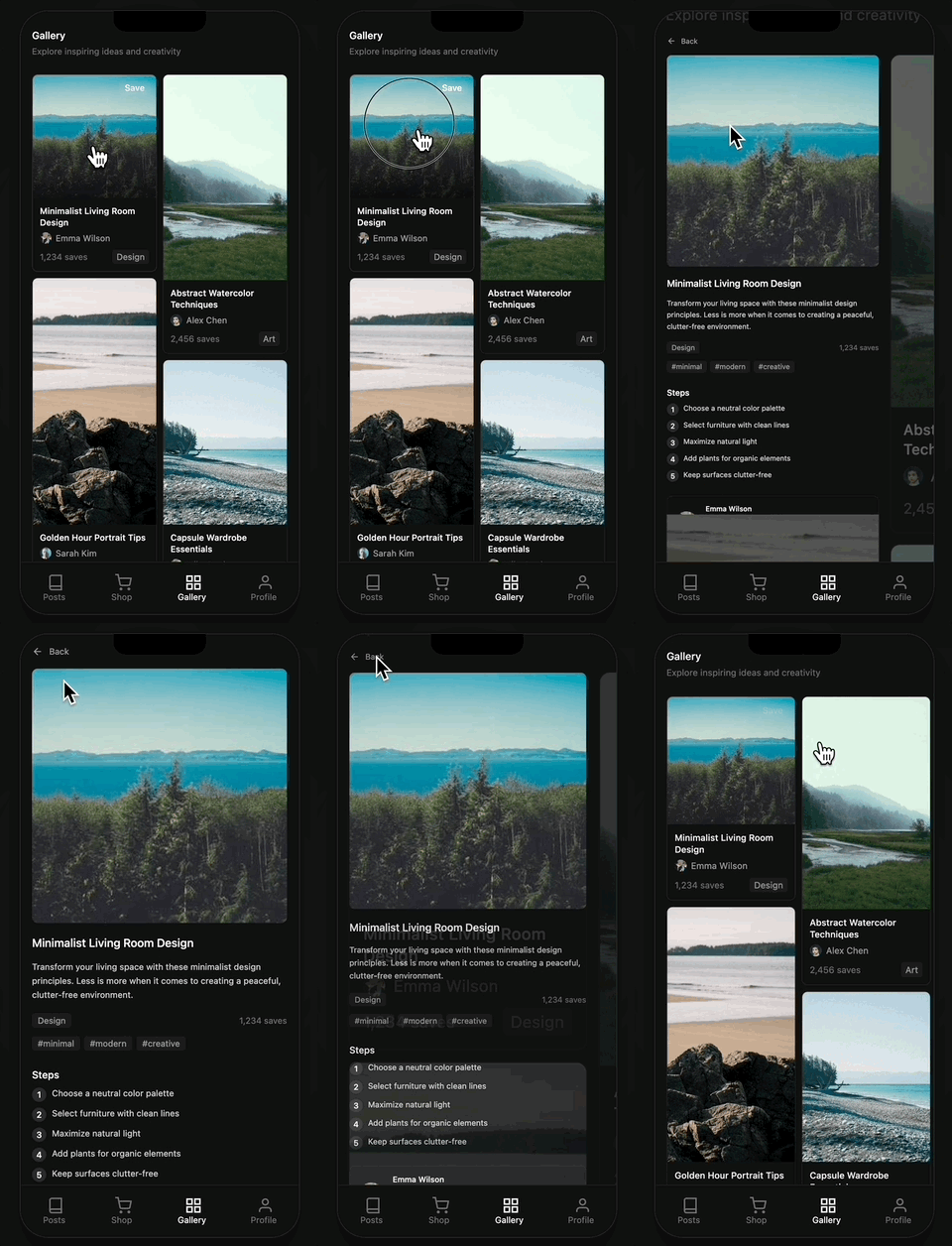
Template location: pages/pinterest/
Setting Data Attributes (Required!)
Pinterest transition requires data attributes to specify which images connect.
components/pin-card.vue (gallery):
<template>
  <NuxtLink :to="`/pinterest/${item.id}`">
    <div class="relative" :style="{ aspectRatio: item.aspectRatio }">
      <img
        :src="item.image"
        :alt="item.title"
        class="w-full h-full object-cover"
        :data-pinterest-gallery-key="item.id"
      />
    </div>
  </NuxtLink>
</template>

<script setup lang="ts">
defineProps<{
  item: PinterestItem;
}>();
</script>
pages/pinterest/[id].vue (detail):
<template>
  <SsgoiTransition :id="`/pinterest/${id}`">
    <div v-if="item">
      <img
        :src="item.image"
        :alt="item.title"
        :style="{ aspectRatio: item.aspectRatio }"
        :data-pinterest-detail-key="item.id"
      />
    </div>
  </SsgoiTransition>
</template>

<script setup lang="ts">
import { SsgoiTransition } from '@ssgoi/vue';

const route = useRoute();
const id = route.params.id as string;

const item = usePinterestItem(id);
</script>
Key point:
data-pinterest-gallery-keyanddata-pinterest-detail-keymust have the same id for SSGOI to recognize the connection.
Config setup:
{
  from: '/pinterest/*',
  to: '/pinterest',
  transition: pinterest(),
  symmetric: true,
}
Instagram Transition
An effect that transitions from a profile feed grid to detail. Similar to Pinterest, but the gallery remains visible.

Template location: pages/profile/
Setting Data Attributes
components/post-card.vue (grid):
<template>
  <NuxtLink :to="`/profile/${post.id}`">
    <img
      :src="post.coverImage.url"
      :alt="post.title"
      class="w-full h-auto object-cover"
      :data-instagram-gallery-key="post.id"
    />
  </NuxtLink>
</template>

<script setup lang="ts">
defineProps<{
  post: ProfilePost;
}>();
</script>
pages/profile/[id].vue (detail):
<template>
  <SsgoiTransition :id="`/profile/${id}`">
    <div v-if="post">
      <img
        :src="post.coverImage.url"
        :alt="post.title"
        :data-instagram-detail-key="post.id"
      />
    </div>
  </SsgoiTransition>
</template>

<script setup lang="ts">
import { SsgoiTransition } from '@ssgoi/vue';

const route = useRoute();
const id = route.params.id as string;

const post = useProfilePost(id);
</script>
Config setup:
{
  from: '/profile',
  to: '/profile/*',
  transition: instagram(),
  symmetric: true,
}
Controlling Timing with Spring Options
All transitions use spring-based physics animations. You can adjust speed and feel with the spring option.
drill({
  direction: 'enter',
  spring: {
    stiffness: 200, // Higher = faster
    damping: 20, // Higher = less bouncy
    doubleSpring: true, // Enable ease-in-out effect
  },
});
Spring Options Explained
| Option | Description | Effect |
|---|---|---|
stiffness | Stiffness | Higher = faster and more responsive |
damping | Damping | Higher = less bouncy, smoother |
doubleSpring | Double Spring | true/false - ease-in-out effect |
What is doubleSpring? Like CSS's ease-in-out, it provides smooth starts and ends. For more details, see the Double Spring blog post.
Useful Options
symmetric Option
Automatically sets up bidirectional transitions.
// Just set one like this
{
  from: '/pinterest/*',
  to: '/pinterest',
  transition: pinterest(),
  symmetric: true,
}

// Reverse direction is automatically applied
Wildcard Routes
Use * to match all sub-paths.
// Matches /posts/1, /posts/abc, etc.
{ from: '/posts', to: '/posts/*', ... }
Conclusion
Now you can apply native-like page transitions to your Nuxt web apps!
Resources
- GitHub: https://github.com/meursyphus/ssgoi
- Official Docs: https://ssgoi.dev
- Nuxt Template: https://github.com/meursyphus/ssgoi/tree/main/templates/nuxt
Try wrapping it in a webview to turn it into a real app!